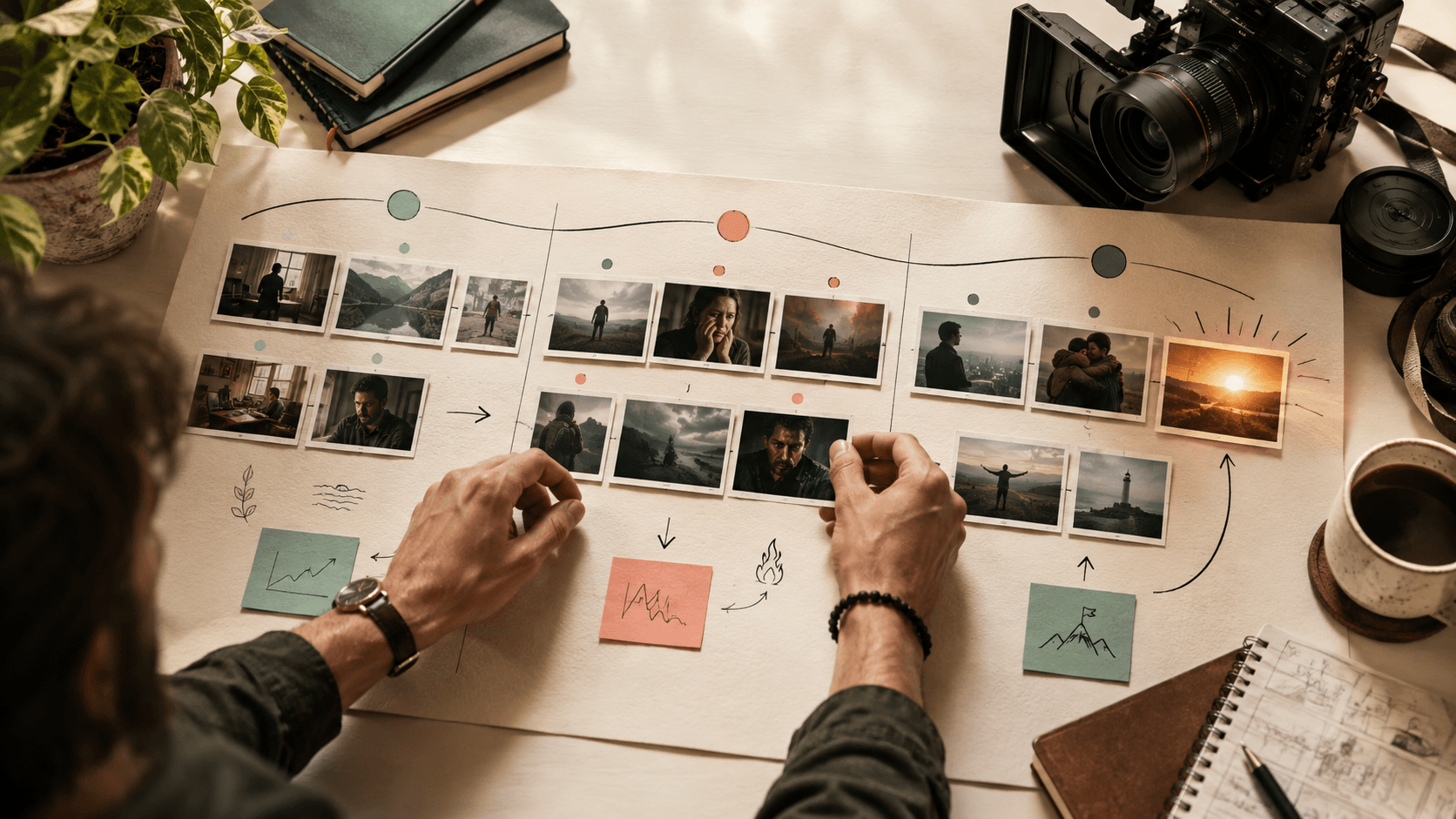
Here's Pixar's 22 Rules of Storytelling, but applied to YouTube. Better story means higher retention and more views. This is the ultimate storytelling framework for new and seasoned YouTubers alike 🧵/22 1. "You admire a character for trying more than for their successes."
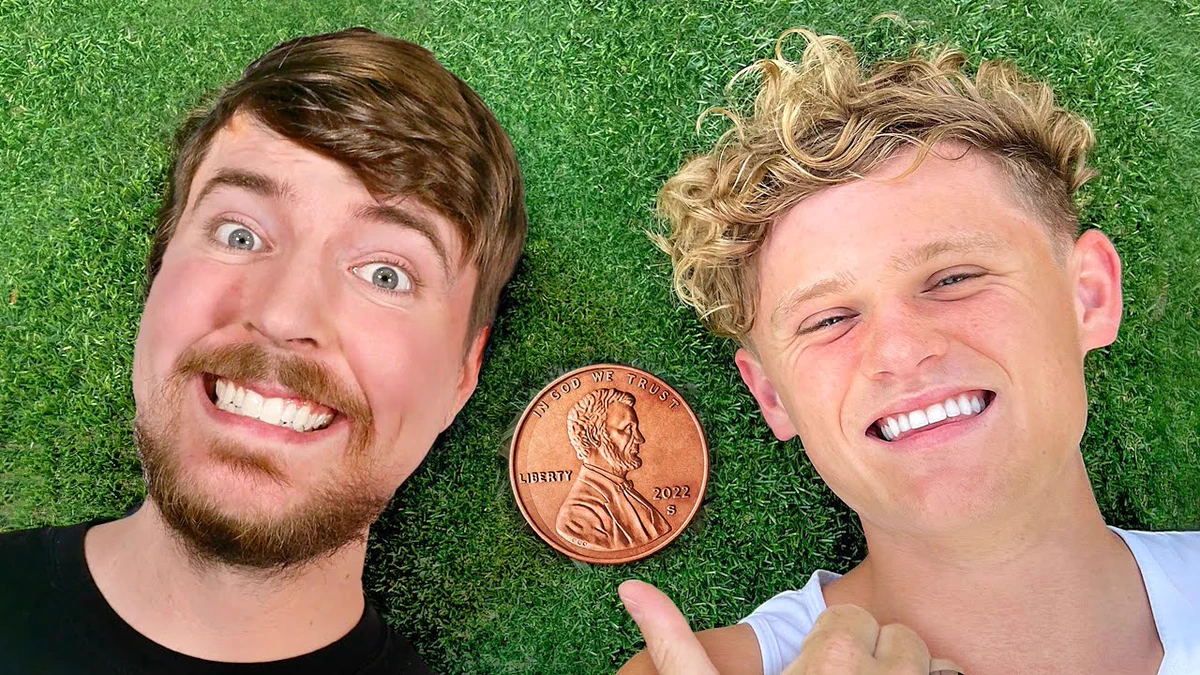
1b. A lot of people get confused with thinking that a win is the payoff. MrBeast's failed attempt to not eat for 30 days. Dream's manhunts where he actually gets caught. Even Ryan on days where he got reset. Emotional investment is in the attempt, not just the outcome.

2. "You gotta keep in mind what’s interesting to you as an audience, not what’s fun to do as a writer. They can be very different." I've learnt this the hard way. Ages ago I did a video called 'My Hyperaesthetic Notion', where I had a comedy skit at the start. And oh my.

3. "Trying for theme is important, but you won’t see what the story is actually about til you’re at the end of it. Now rewrite." This applies to YT where there's unscripted content. So record everything that happens...but edit to fit the main plotline. Cut most other stuff out.
4. "Once upon a time there was ___. Every day, ___. One day ___. Because of that, ___. Because of that, ___. Until finally ___." In YT, this is too long. But the main way you apply this is that your *character* has to experience change. Change is the life of a story.
5. "Simplify. Focus. Combine characters. Hop over detours. You’ll feel like you’re losing valuable stuff but it sets you free." Occasionally, especially with larger YT'ers, there's too many characters to follow. This is emotionally confusing. Focus harder on less characters.
6. "What is your character good at, comfortable with? Throw the polar opposite at them. Challenge them. How do they deal?" In YT/story, true conflict makes a story interesting. The more real the conflict, the more interesting your YouTube video, the longer viewers stick around.
7. "Come up with your ending before you figure out your middle." I disagree with this point for YouTube, because you can't always do that with unscripted. However, your *idea* is important, because a real good idea organically has lots of interesting content that should come up.
8. "Finish your story, let go even if it’s not perfect. In an ideal world you have both, but move on. Do better next time." Perfectionism is often good because quality > quantity when it comes to individual videos, but only when it *doesn't* get in the way of learning faster.
9. "When you’re stuck, make a list of what WOULDN’T happen next. Lots of times the material to get you unstuck will show up." Actually, this process is called Inversion, and is an incredible exercise. If you're really stuck, Qs like "how I can make this boring?" unblock things.
10a. "Pull apart the stories you like. What you like in them is a part of you; you’ve got to recognize it before you can use it." Most people watch YouTube just to consume it. But sometimes you should watch it with a "how do I replicate this?" mindset.
10b. Someone recently asked me, where do you learn everything you know about YouTube storytelling? Apart from listening to the smart people in the field and reading books... I literally just analyse thousands of videos and take more notes than anyone else can be bothered to.
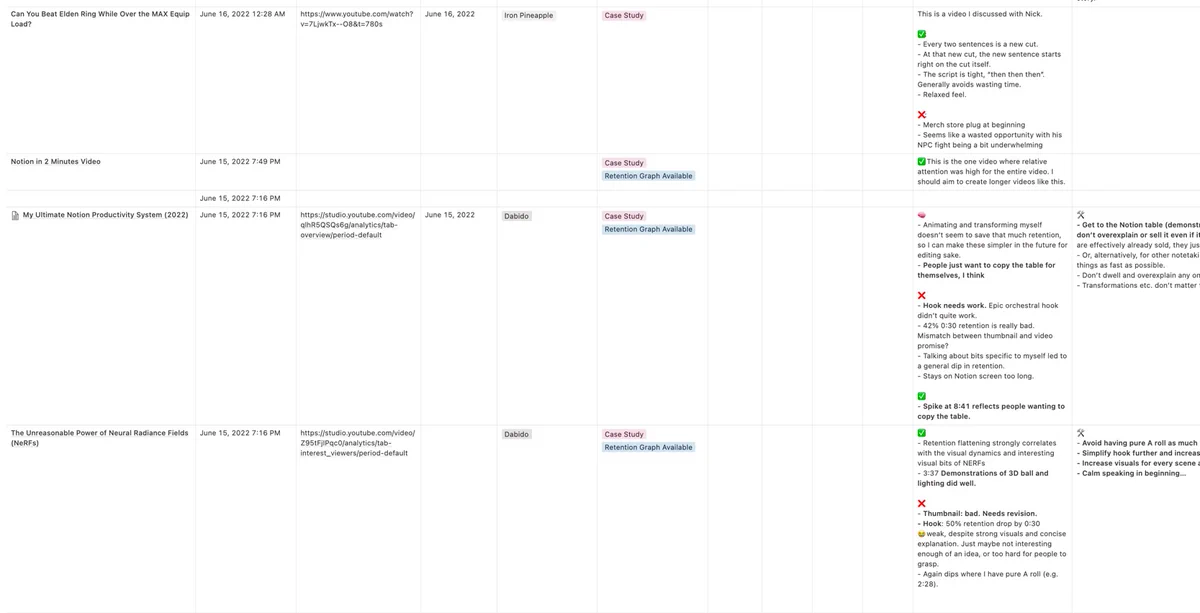
11. "Putting it on paper lets you start fixing it. If it stays in your head, a perfect idea, you’ll never share it with anyone." But even if I analyse 1000s of videos, a single sentence of advice from YouTubers smarter than me often completely changes a video for the better.
12. "Discount the 1st thing that comes to mind. And the 2nd, 3rd, 4th, 5th – get the obvious out of the way." @AliAbdaal has this concept of FBR: Fast, Bad, Wrong. Spam all the ideas you can think of without judgement first when writing, then good ideas will eventually flow.
13. "Give your characters opinions. Passive/malleable might seem likable to you as you write, but it’s poison to the audience." In YT, you've gotta think of the Chekhov's gun: if there's something/someone that's in the video, it *has* to have some function. Otherwise, cut.
14. "Why must you tell THIS story? What’s the belief burning within you that your story feeds off of? That’s the heart of it." I love @RyanTrahan's recent talk about redemptive work: create for restoration, not exploitation. When you do that, your videos are better anyway.
15. "If you were your character, in this situation, how would you feel? Honesty lends credibility to unbelievable situations." @Kwebbelkop had a recent revelation with @LowKeyJude that for the viewer to have fun, he has to have fun. Real emotions felt = real emotion received.
16. "What are the stakes? Give us reason to root for the character. What happens if they don’t succeed? Stack the odds against." I've talked about this in another tweet (follow not to miss them), but actually, the ONLY good stakes are the ones the character really cares about.
17. "No work is ever wasted. If it’s not working, let go and move on – it’ll come back around to be useful later."
18. "You have to know yourself: the difference between doing your best & fussing. Story is testing, not refining." This is super true when you have a retention graph available to you at all times. Focus time on the 99% that makes the story better, not the 1% of micro edits.
19. "Coincidences to get characters into trouble are great; coincidences to get them out of it are cheating." Hard to apply to YouTube, but I guess if you provide an easy way out for yourself or a character, it just feels lame for the viewer. Opt for hard whenever possible.
20. "Exercise: take the building blocks of a movie you dislike. How d’you rearrange them into what you DO like?" This is actually the same as #10. But to be more specific, I will sometimes transcribe scripts word for word of a particular segment, to break it down properly.
21. "You gotta identify with your situation/characters, can’t just write ‘cool’. What would make YOU act that way?" The best YouTubers have an understanding of how their audience feels at all times in a video. That sense of empathy is the most important one to develop.
22a. "What’s the essence of your story? Most economical telling of it? If you know that, you can build out from there." The title/thumbnail/idea/hook isn't just about creating a curiosity gap, as many will say. Every single moment of your video signals its present/future value.
22b. I was asked recently: how do you know when to deviate from the plotline? My answer was: try to stay on the main plotline as much as you can. Even like in anime, filler moments within YouTube videos is a waste of energy and time. Avoid filler where possible.
Please feel free to RT the first thread if you found this helpful :) I talk about some YouTube best practices in this course (go.dabido.com.au/storytelling) which I plan to beef out even more soon. Otherwise, here's 11 more tips if 22 wasn't enough(!):
Here’s 11 more tips for YouTube storytelling, for better retention and therefore more views. Once again, it’s for new and seasoned YouTubers. 🧵/11 1. The opening visuals of the hook should match the thumbnail. That immediate feedback is already a mini-payoff in itself.