If you master YouTube storytelling, you'll definitely grow your YouTube channel. If someone made a thread with *100* tips about YouTube storytelling, that would be *absurdly* valuable, right? But would anyone actually do that...? 🧵/100 1. Story starts from the thumbnail.
2. The start of a video is called the hook. The opening hook should reaffirm the thumbnail and title. If the expectation of the click isn't met, then it just means the person will click off.
(This is the only tweet here I'll plug my course, go.dabido.com.au/storytelling, where I've included loads of YouTuber case studies, advice, thumbnail advice, and I'll be renaming it soon to... YouTube Storytelling: Beyond Retention ...because story is about so much more than that.)
3. The hook should be easy to understand. Loss of clarity here means confusion, and confusion means dropoff in retention.
4. The hook shouldn't be so fast that people click off immediately. Often a big trouble with people who are inspired by MrBeast's content superficially. Fast can be good, but too fast is bad.
5. Hooks should be visually dynamic. It's that first dopamine hit. If someone performs the action of clicking, but doesn't receive any reward or sense of surprise at all, it's not an effective hook.
6. The best hooks create strong anticipation. This can be done with conflict, a game, an unusual scenario...
7. But anticipation only works if the viewer can imagine a specific future scenario that might happen. If it's too hard to comprehend the possibilities of what might happen, it may very well be a weak hook.
8. If trying to demonstrate the massive scale of something in a hook, usually start from the small thing and go to large. Doing that in reverse is underwhelming. I'll be including a case study soon of that in MrBeast's Hydraulic Press video at
9. Basically, if you're trying to demonstrate the "wow" factor of anything, use juxtaposition. For example, if you're trying to demonstrate how ridiculously strong one man is, have him win a tug of war against 10 other men.
10. The reactions of characters in your story also amplify the effect of those "wow" moments. We as viewers look to how other people react, to know how we should react.
11. The hook needs to match the audience. In the most extreme example: don't shout at your audience if they came for an ASMR video. However, it's more likely that the mismatch for YouTubers is much subtler than that, so be aware of it.
12. Avoid muted colours in the hook if you can.
13. Don't have too many visual elements in the hook, though. If there's too much to focus on, then people won't know where to look.
14. It's a pretty common technique to include text at the beginning of a video. Is this necessary? Not particularly. You can have a good video regardless. However, you *should* make sure it's not distracting someone away from the main point of interest.
15. There are times when text in video are helpful, though: - Just increasing visual dynamics a little bit - When audio isn't 100% clear - When multiple people are saying things with voices that are overlapping each other
16. The opening visual does often benefit from being visually bright.
17. For the *whole* video, you must keep in mind that many people will be watching on mobile! So if you have elements that are too small to be seen on mobile, that's troublesome and you should reconsider your videography.
18. A very very common mistake I've seen even amongst really experienced YouTubers, is that the hook is too "stale". You really need to use it to leap into the action of the video, even if a calmer video.
19. Let's talk pacing. It's different for everyone. Good pacing leads to good retention. But fast pacing =/= good pacing. I've held people's retention better on slower hooks than ultra fast hooks before. Just aim for as much "non-filler" as possible.
20. The best kind of pacing provides eventual escalation to a climax. However, it's not a straight A->B thing, unless your video is very short.
21. Variance in pacing is important. You don't have to whiplash people between fast/slow, but you probably should avoid suffocating people with a rapid tempo, and avoid boring people with a tempo that doesn't seem like it's going anywhere.
22. Let's talk about characters. If you're a solo YouTuber, you're the character. If there's anyone else, everyone's a character. If you don't have anyone else, you can make non-animated things a character, to make it more interesting.
23. A character that we invest in emotionally, is one that we can relate to and like somehow. That's why the concept of "Save The Cat" exists. The hero that saves the cat is one we can get behind. There's many ways to achieve this. For example...
I'm still going! Twitter just doesn't let you write more than 25 tweets at a time...go figure. 25. If a character does exist, then the viewer should understand their actual purpose in the story. Otherwise, they're just some random dude going along for the ride, like a NPC.
26. If you wanted to create conflict between characters, then it helps if they're diametrically opposed in some obvious way. A recent video that comes to mind is the interaction between him, a YouTuber doing crazy stuff, and the extremely stoic jungle man of few words Harry.
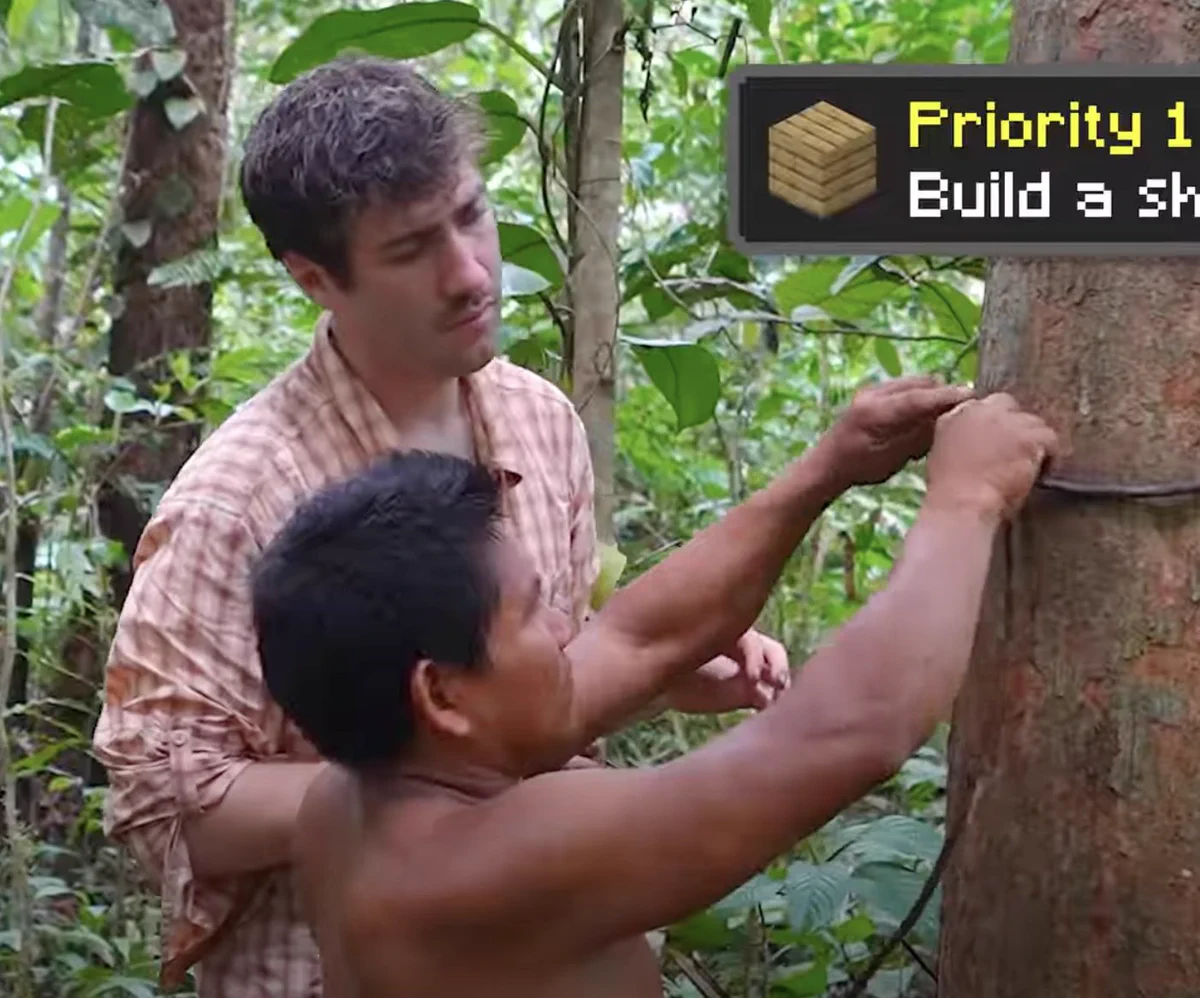
27. That said, if you're an IRL YouTuber, many times it's not actually necessary to generate "situations" just for the drama. I think you'll find that if you hang out with different types of people enough, there are many levels of depth to people.
28. So instead of forcing situations, you can just let the situation itself be pretty interesting, and let people's natural reactions take their form. Authenticity > everything. If people's reactions aren't interesting enough, then the problem may actually be in the script.
29. How you come across on camera and how you actually feel you're presenting yourself, can be two very different things. For example, something that feels like an 8/10 in terms of your speaking energy and volume etc, actually can come across as a 7.
30. Therefore, perhaps one of the most important pieces of storytelling advice is: always do your own editing when you start. It's tempting for more resourceful YouTubers to hire an editor "as quickly as possible", but this is actually bad for skill development.
31. Let's talk about scripting a bit. In terms of how much you script, it'll depend on your content type of course. In tech and educational YouTubing, one might script every word. MrWhoseTheBoss spends many, many hours on scripts alone for example.
32. One might think that it slows down production immensely, but in those cases the opposite is often true. If you combine an intense script with a teleprompter, the recording is smoother and the *edit* is much smoother to do. But what about if there's stuff you can't script?
33. For me, one trick is that I script all the things I can script, but leave room for "reaction" cells. I just denote it in a table like " [] " And that leaves space for me to genuinely react to the situation that I *think* will turn out funny.

34. Show, don't tell. The reason for voiceovers is often that you just quickly explain something in two sentences that would otherwise take 45 seconds to show. But where possible, showing things is more emotionally powerful.
35. A skill you'll develop as a YouTuber, is that you'll be able to visualise how certain script segments will play out as you're writing them, and then how people will react to them. The best way I can describe is: you play the video in your head, and can "see" it.
36. If you're building out the premise of a "game" in the video, try to be brief. If there's loads of criteria, consider showing them as they come up. There's no point in getting the audience to try to remember them, because they'll forget anyway + they'll be more bored.
37. No matter how nicely you edit text, in the end, it's still text. Don't focus on making text fancier, just focus on making the visual more interesting, or skipping it if possible.
38. Always be wary of core vs non-core audience, in your scripting and recording. Does the target audience actually understand the thing you're talking about?
39. Similar to above, universal metrics of scale therefore help. In MrBeast's hydraulic press vs Lamborghini video, there's a segment where he makes a car jump over 12 buses. It would be weak if this were "can this car jump 200 metres?" because that's harder to conceptualise.
40. Ironic for this 100-tweet thread, but...always be wary of overexplaining your process! Always be thinking: does the person on the other side of the screen care about this sentence?
41. All the work you do in the background for something does not necessarily contribute to what the viewer is supposed to feel. Try to generally avoid sentences that focus too much on exceptions/caveats/explaining why you could or couldn’t do something.
42. Hayao Miyazaki (Studio Ghibli): “I should not handle a scene in a certain way for the sake of the audience…There are more profound things than simply logic that guide the creation of a story.” If you're stuck on a decision, just do what feels best to you, and move.
43. Once I asked my friend about what feedback for my videos. He said sometimes he didn't watch them: because he and his girlfriend felt "they we were something we had to strap ourselves in for" and just kept them for later. Avoid cognitive overload.
44. In video presentation, it sounds simple, but if you want a particular word to stick in someone's head then think about how you're presenting that word. "This is HUUUUUGGGEEE" vs. "That is (huge)." vs. "That is TINNNNNNYYYYY" vs "that is tiny..."
45. Filmic language is easier to understand in people's heads than non-filmic language. "The memory of the taste that that man's apple tasted like." vs. "The apple's taste stayed in that man's memory." Build objects bit by bit in people's mind, in the right order.
46. With any story, the idea behind it is to build momentum and increase that momentum as time goes on
47. Avoid having too much of any one same emotion at once.
48. Be aware of audience "training". The film Everything Everywhere All At Once is a quite complex film to jump into, but what they do is to train audiences how the movie works (i.e. if chars do something super weird, then they shift universes).
49. There are multiple types of foreshadowing. Foreshadowing builds anticipation. If you foreshadow with A-roll, you just include a teaser clip of the main payoff the viewer came for.
50. B-roll foreshadowing is where you actually tease with something that's *not* the real payoff, but aims to make people feel the same anticipation. For example, if you're walking a tightrope for a video, show a bunch of footage of other people falling off in past attempts.
51. If you're transitioning between storylines (e.g. different character POVs), rather than abruptly jump cutting, have character A say a line like "I wonder what B is doing" before jumping to character B. Just makes things smoother.
52. If you're trying to use those parallel storylines, consider greatly emphasising that contrast with the music (and lack of), the videography, etc. Contrast should in every sense be different, to feel different.
53. Emotional stakes are a really important part of YouTube storytelling. But stakes are built off people's care, not of the amplitude of consequences. Related, but not the same.
54. Especially in educational storytelling, it is critical to get people *interested* before getting the next step of teaching them something. I'll give you an example: MrWhoseTheBoss made a video about NFTs, but, only explained what they actually do about 2-3 minutes in.
55. For complex and abstract concepts, you should try your very best to simplify it down in a way that people will understand. One of the best ways to do this is via analogies. For example, I always explain the heart as just a fancy "pump" to patients, and build upon that.
56. A Roll is the term for "you (or characters) on screen". B Roll is the term for "non-people footage". Always think about whether you've got this balance right, which is highly dependent on audience and niche.
57. The best videos both appeal to current audience as well as broad appeal. If the appeal is too narrow, then your channel doesn't have room to expand.
58. ‼️This tip is super important. In every kind of video: once you've given the audience the full answer, they leave. Always have an uncompleted answer to keep people watching. Don't annoy them of course and still make the video good, but go as soon as that answer is done.
59. Let's talk about camera angles and how you can use them to best emphasise particular feelings in YT. X-Wide shots give a wide view of the setting. The focus is on the significance of the setting and the character’s relationship to it, rather than the character themselves.

60. Here's another X-Wide example, except anime.
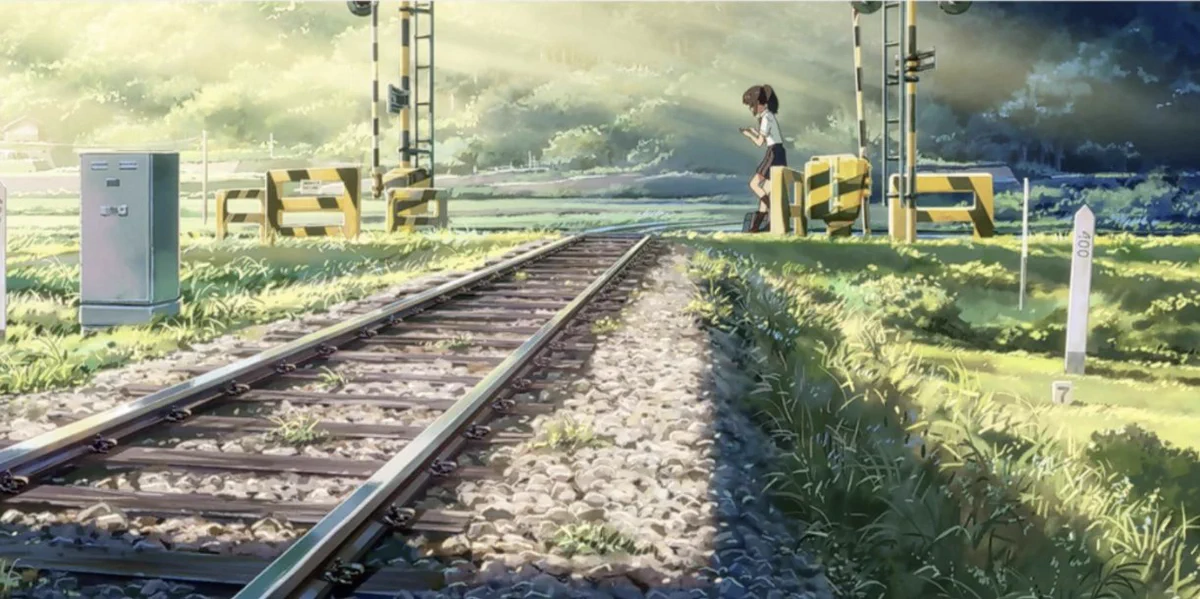
61. Wide shots makes the character the focus of shot, but whole body still in frame. It focuses on immediate surroundings and what they’re doing.

62. Medium (Mid) shots are the most common shots for dialogue. We can see the character’s expression, whilst still having some context of their surroundings.

63. These shots can also be called a single, a 2-shot, or a 3-shot — for one, two, or three characters in the shot respectively.



64. Close-up shots are where the subject’s face fills up the entire shot. The focus is entirely on the facial expressions of the character.
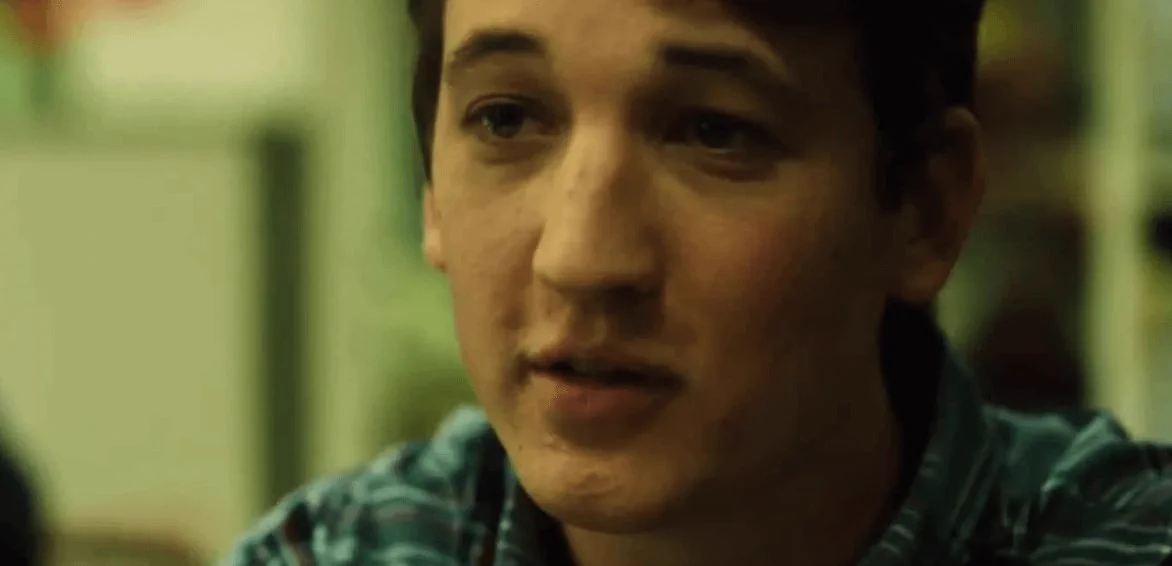
65. A "Spielberg Face Close Up" is a slow pan on a character’s face as they look with amazement at something that's not on the screen. This makes the "reveal" interesting.
67. Now that we've learnt about types of distances for shots and how they contribute to videography, let's talk about camera angles. We'll start with all the horizontal ones. - Straight-on, Frontal angle. Used to make us drawn to the character, or to make us feel uncomfortable.



68. 3/4 (three quarter) angle. We’re more objectively observing them, but we don’t get the feeling they’re aware of us. We also get a sense of the character’s 3 dimensionality.


69. Profile angle. This is a shot from the side. This concentrates on the intention and focus of a character.
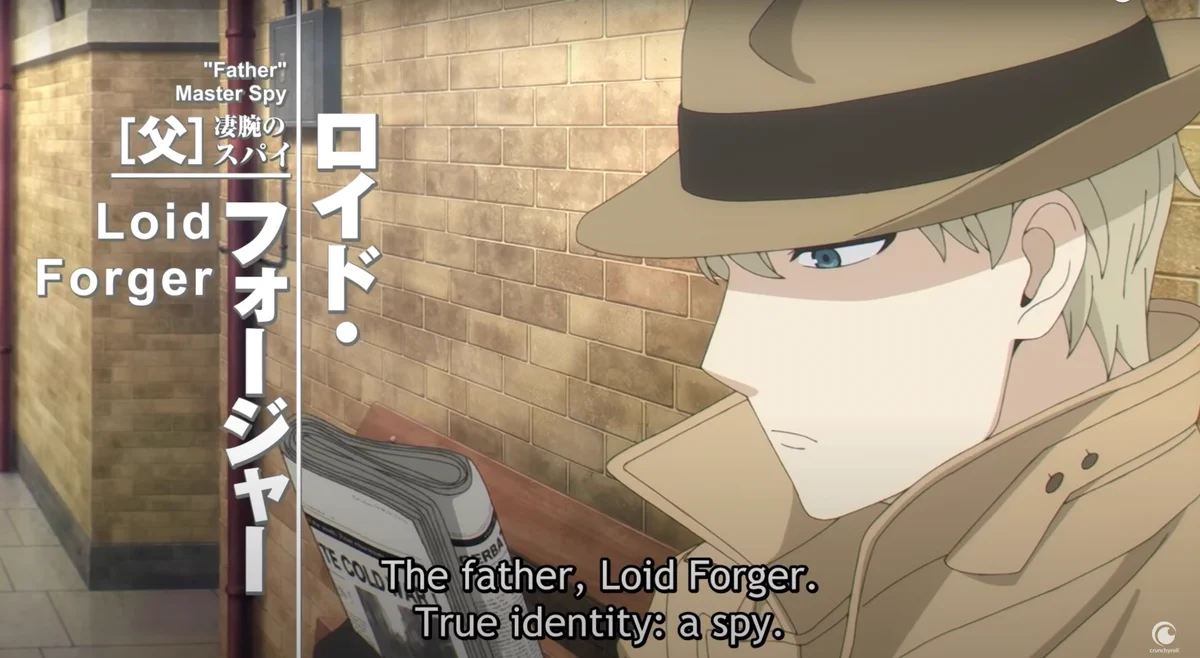

70. 3/4 back angle. Since we can't focus on their face, we focus on what they're looking at.

71. Back angle. Creates an intriguing view. Can be followed up with a satisfying face reveal of emotion, if a simple progression, or to surprise the audience with a character's emotion (e.g. should be stoic but is actually crying -> would be a heart wrenching moment to watch).

72. POV. We see through the character's eyes.

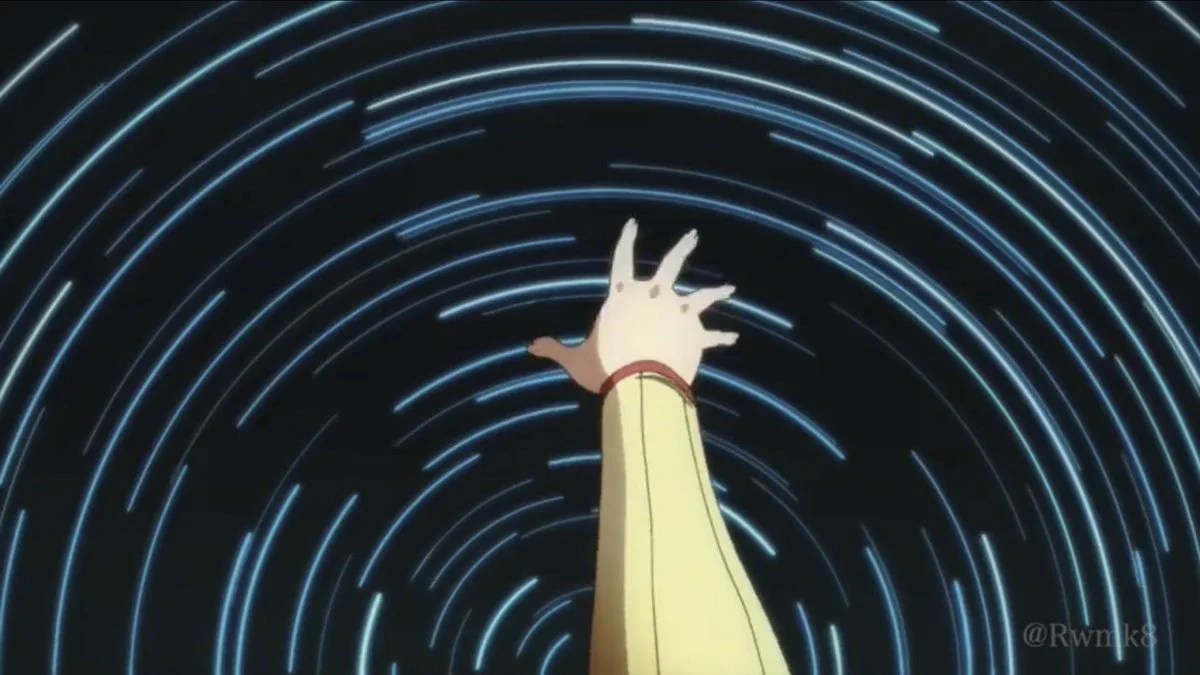
74. These are often used to establish a geographical location and a clear sense of the scene’s layout, or to establish a geographical location. Also can be used to give the audience a layout of the space. In YouTube, often used to demonstrate the massive scale of a concept.

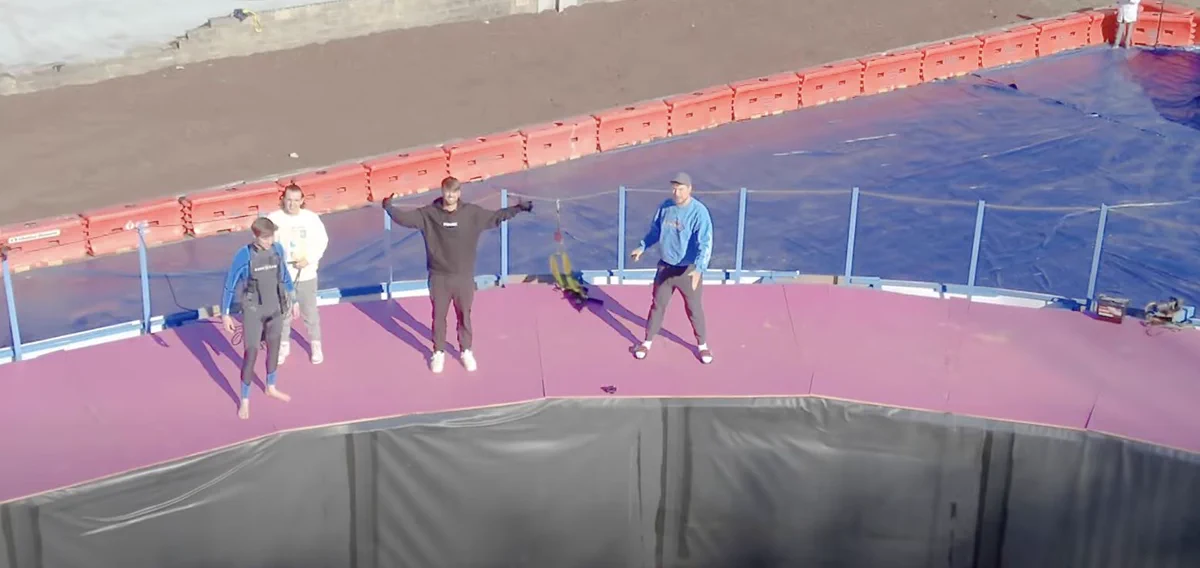
75. High angle. Makes the subject seem smaller in sense, or significant. Bonus: I like Ryan Trahan's use of body language here as an additional bit of showmanship to say "I smol and am no celebrity" in the video 'I Invited 100 Celebrities To My Birthday'. Despite 11M subs haha.
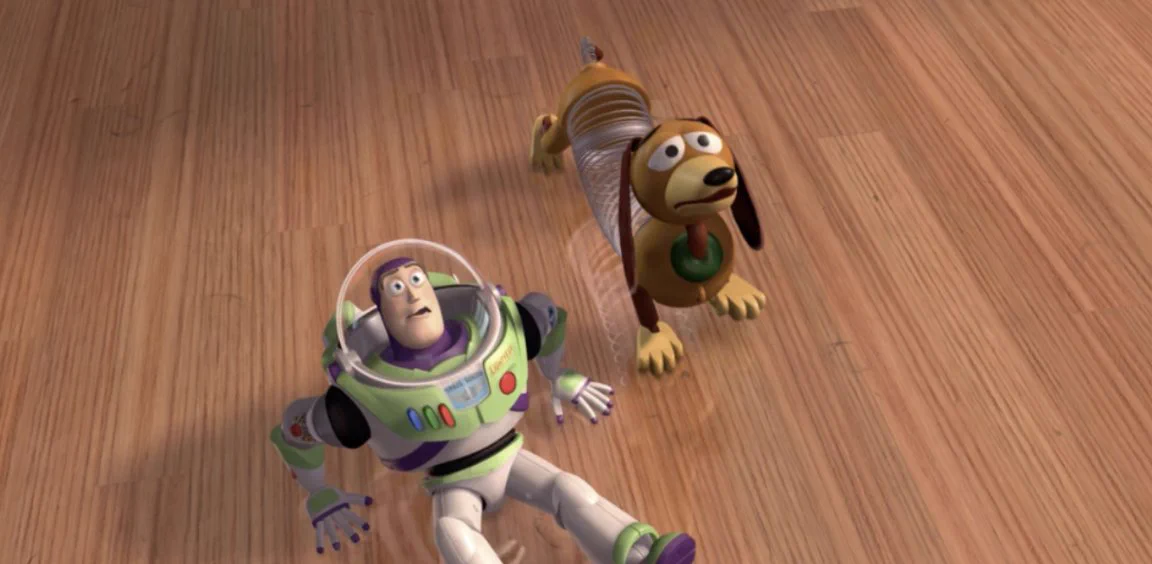

76. Eye level angle. A neutral position that we’re accustomed to seeing.
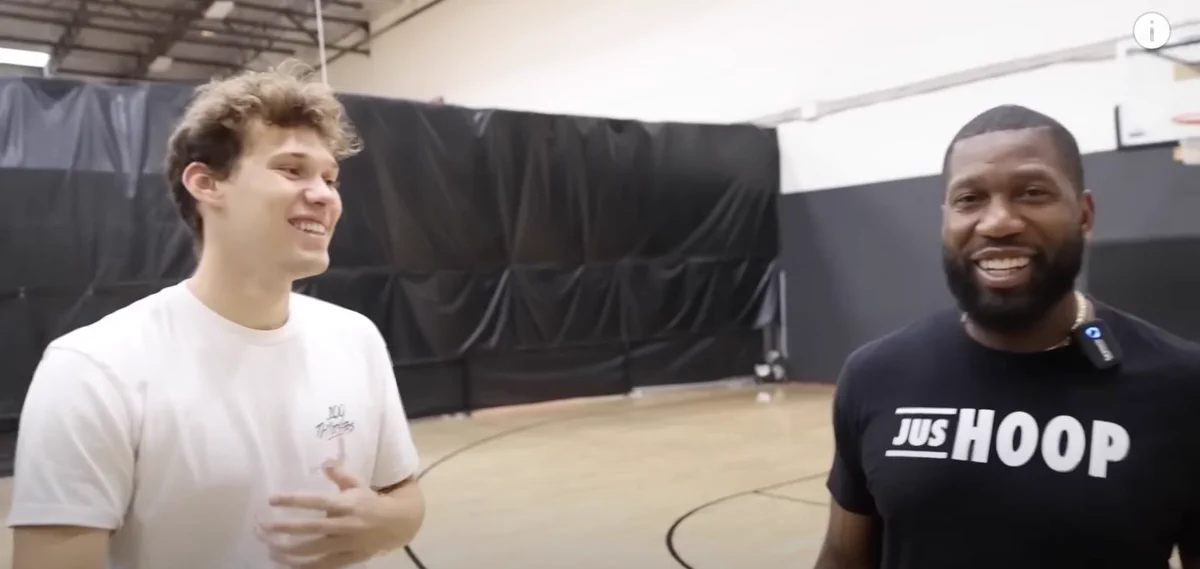
77. Low angle. Exaggerates the significance of the subject.

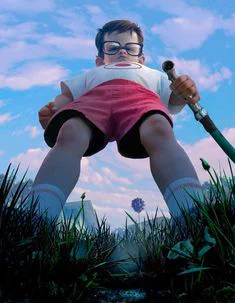
78. Worm’s eye view. The subject is perceived as a powerful force to be reckoned with. Can be used with a sense of humour of the force is, uh, not that scary.
79. Dutch Angle. The camera is tilted sideways, so that we add a sense of imbalance in the frame. Can make things more dynamic in action scenes.
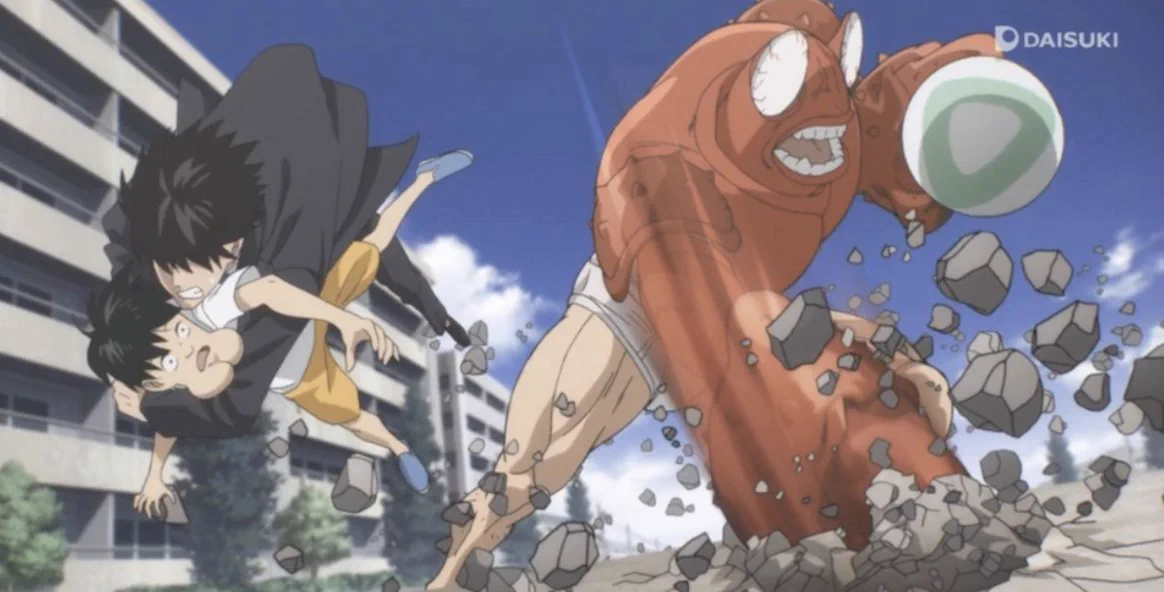
80. We've talked about camera enough, so let's get back to one of the most important questions... What cuts should you actually include in your YouTube video? There's a lot to that question. But there's only two Qs we need to answer for any one shot:
81. Does the shot deliver the right information that the audience should have in mind at this moment?
82. Is the shot emotionally or tonally correct for how the audience should feel at this point?
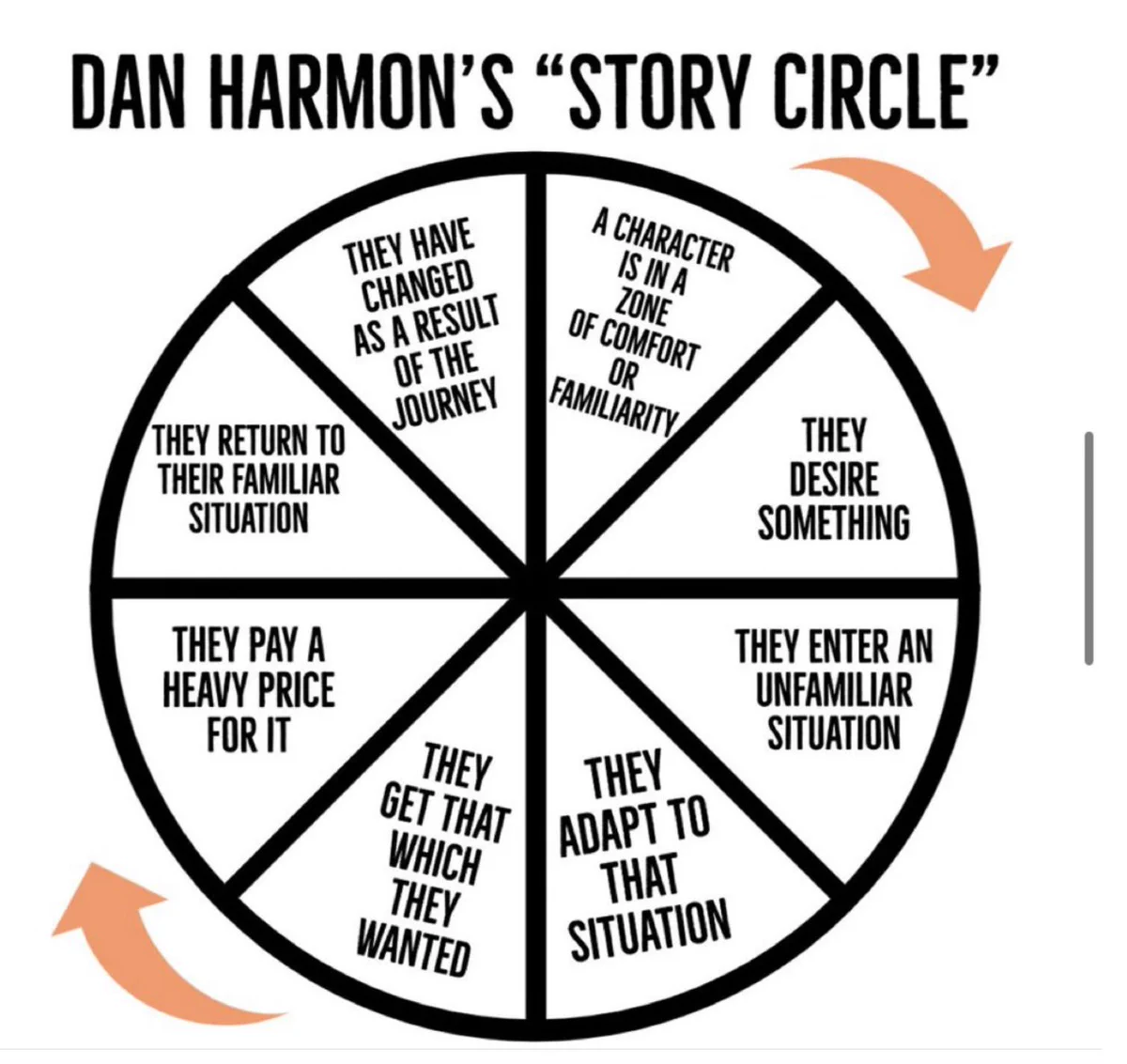
83. There are many frameworks that give you guidance on how to structure a story. Harmon's story circle is a one commonly known by YouTubers who care about storytelling/editing.

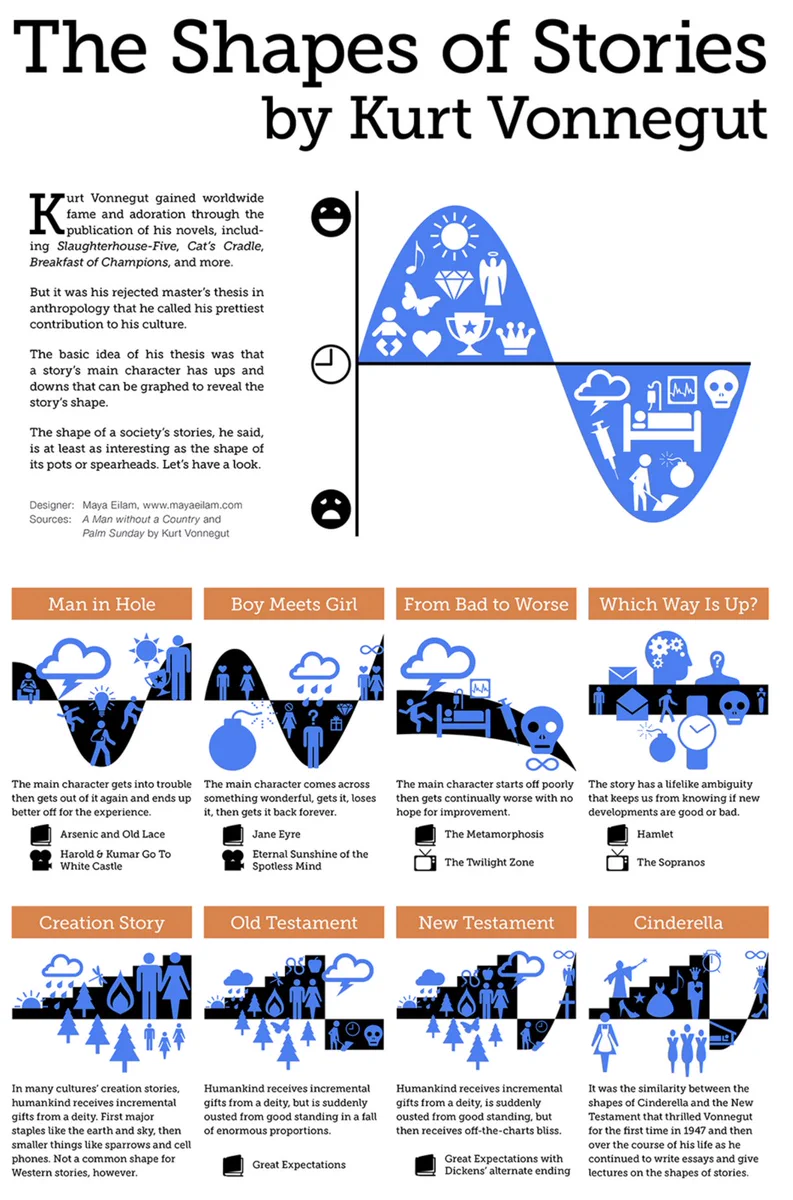
84. You can check out the shapes of stories by Kurt Vonnegut. I don't use it personally, but here you go.
85. Three-Act Structure is another common framework for storytelling. The difference in Three-Act structure for YouTube, is that the Act 1 is very short, and the Act 3 is very short. But do you want conflict/obstacles/climax? Absolutely.

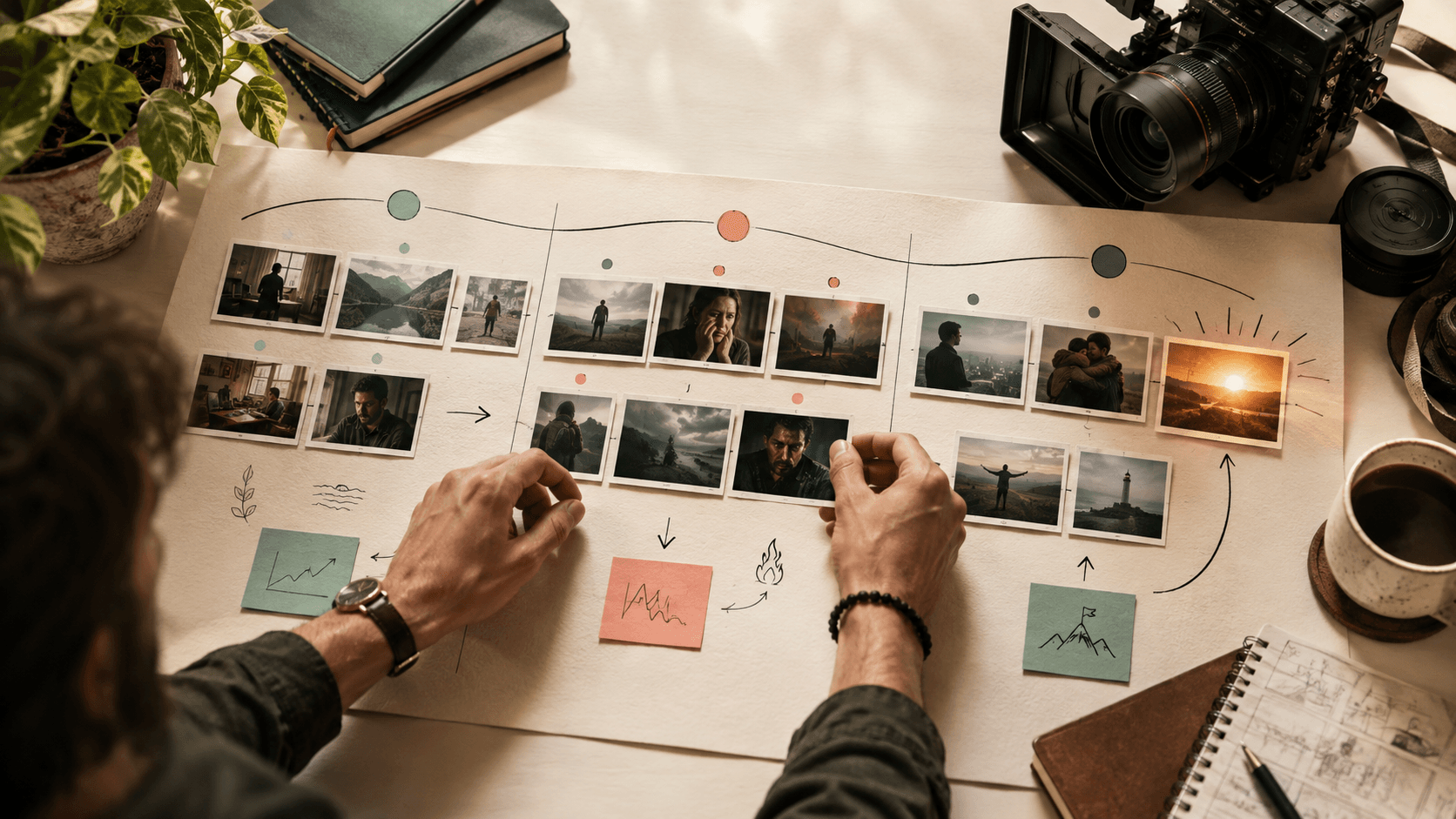
86. @HHillierSmith is still the true 🐐 of YouTube storytelling. This is not sponsored at all, but he'll be releasing his own storytelling course very soon, and you can bet I'll be signing up to that too. Anyway, this is a great structure he uses in: youtube.com/watch?v=2v-Dv5…

87. So now that you've got a structure, and even a bunch of shots that you want to string together, what do you do? Well...even if you want to keep novelty and interest, you want to *reduce mental friction as much as possible*, to keep people immersed. Here's a few ways.
88. 1. Keep the elements within a scene consistent. ✅ Use the 180 degree rule (also called line of action). Basically, if you're wanting to not make your audience feel weird, keep the camera on "one side" of the characters. Unless a new character introduce, or scene changes.


89. Avoid having graphical elements between shots that are too similar in size to each other. This is so hard to show in a tweet, but... Basically, if you have camera angle A at 0 degrees, and camera angle B at 90 degrees, then the camera *needs to not be at same distance*.
90. The reason is that if you go from A -> B at equidistant camera angles, then it messes with people's minds because they feel like the entire world has rotated rapidly 90 degrees. It's better to illustrate a change in camera distance, changing subject size = better.
91. Cutting back and forth between the same camera angles will still make things feel stale. Here's an example of camera angles done well in MrBeast's Lamborghini video. Same lambo, but look at how many camera angles/distances were used to keep things fresh for retention.


92. In almost this whole ridiculously gigantic Twitter thread, I've talked about how to optimise a single video. But I want to broaden out and just talk about the meta of YouTube storytelling as a whole, and how it relates to the type of content that you'll do well with.
93. Firstly, YouTube is a platform for authenticity. YouTube's attempted stuff like YouTube Red and high production things before, but it often doesn't work because it "feels" too produced. Sacrifice perfection for authenticity, and your videos will be +++++ better.
94. YouTube is a platform for the novel. The next MrBeast won't be MrBeast, the next Airrack won't be Airrack. If you're genuinely wanting to become huge, research what works. But then you have to go beyond it, to break new ground somewhere.
95. Some people may say, "I can't...everything's been done before. The platform is over-saturated." I can tell you as a fact that I work with both smaller creators as well as huge ones, but...when the smaller creators develop packaging/storytelling skills, they get +++ views.
96. The YouTube meta is constantly changing. What worked in 2016 won't work today. What works today may not even necessarily work tomorrow. So you have to keep an open mind. The best YT people I know are the most curious about the world, and open to experimentation.
97. YouTube is always going to be for people. As a creator, creating things that make both you and other people happy will always be the most sustainable and surefire path to success. "Adding value" is a business buzzword. Just help people, and delight people. With skill.
98. It's still a wise strategy to always be looking out for areas of asymmetrical demand-supply, of course. Right now, that's YouTube Shorts. Any YouTube strategist worth their salt now has data on that. These opportunities are time-limited. So don't wait to go.
99. On the absolute deepest level of storytelling: If this year were your last year on Earth, what impact would you like to have on people? With what remains of your time, what's the message that you need people to know? Or, what's the joy that you want people to feel?
100. We're extraordinarily fortunate as YouTubers to have the ability to do good. You're not just adjusting numbers on a screen. You're making the day of a kid overseas, your neighbour across the road...anyone. You, yourself, can do that. With soul, effort, and resourcefulness.